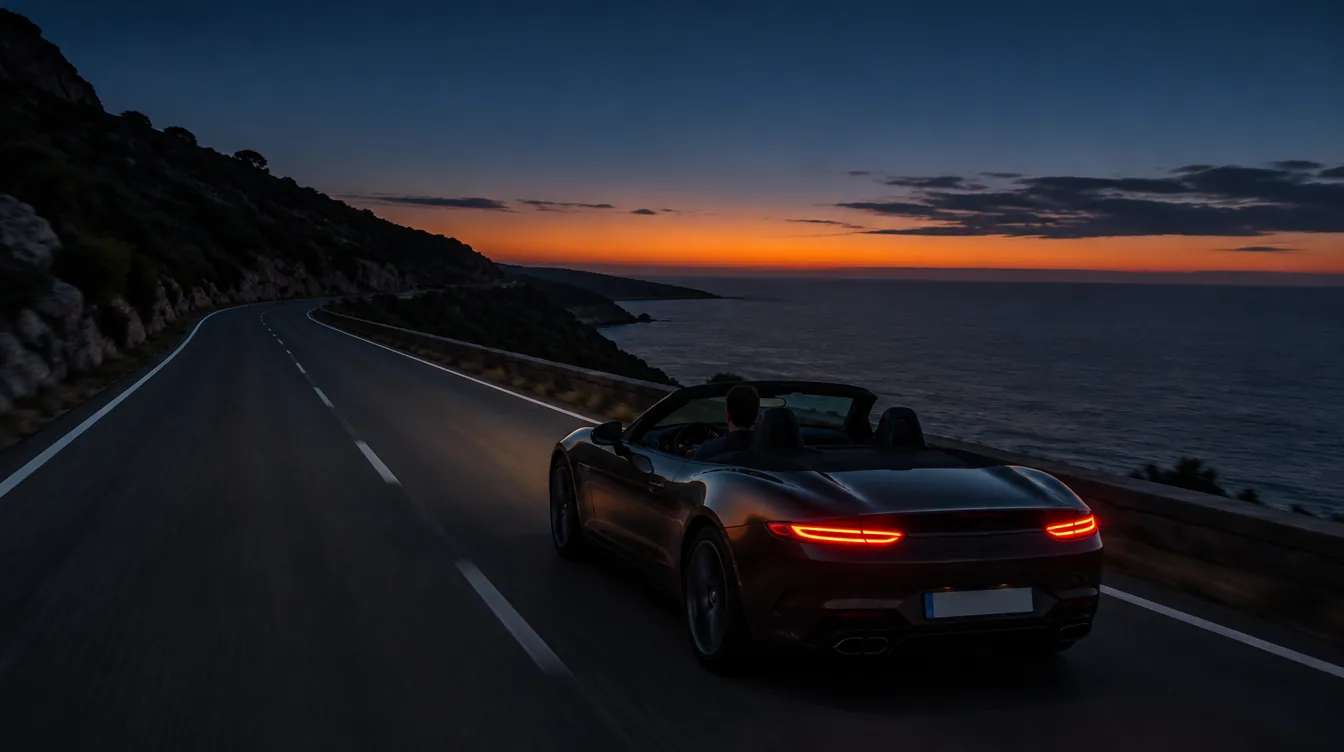
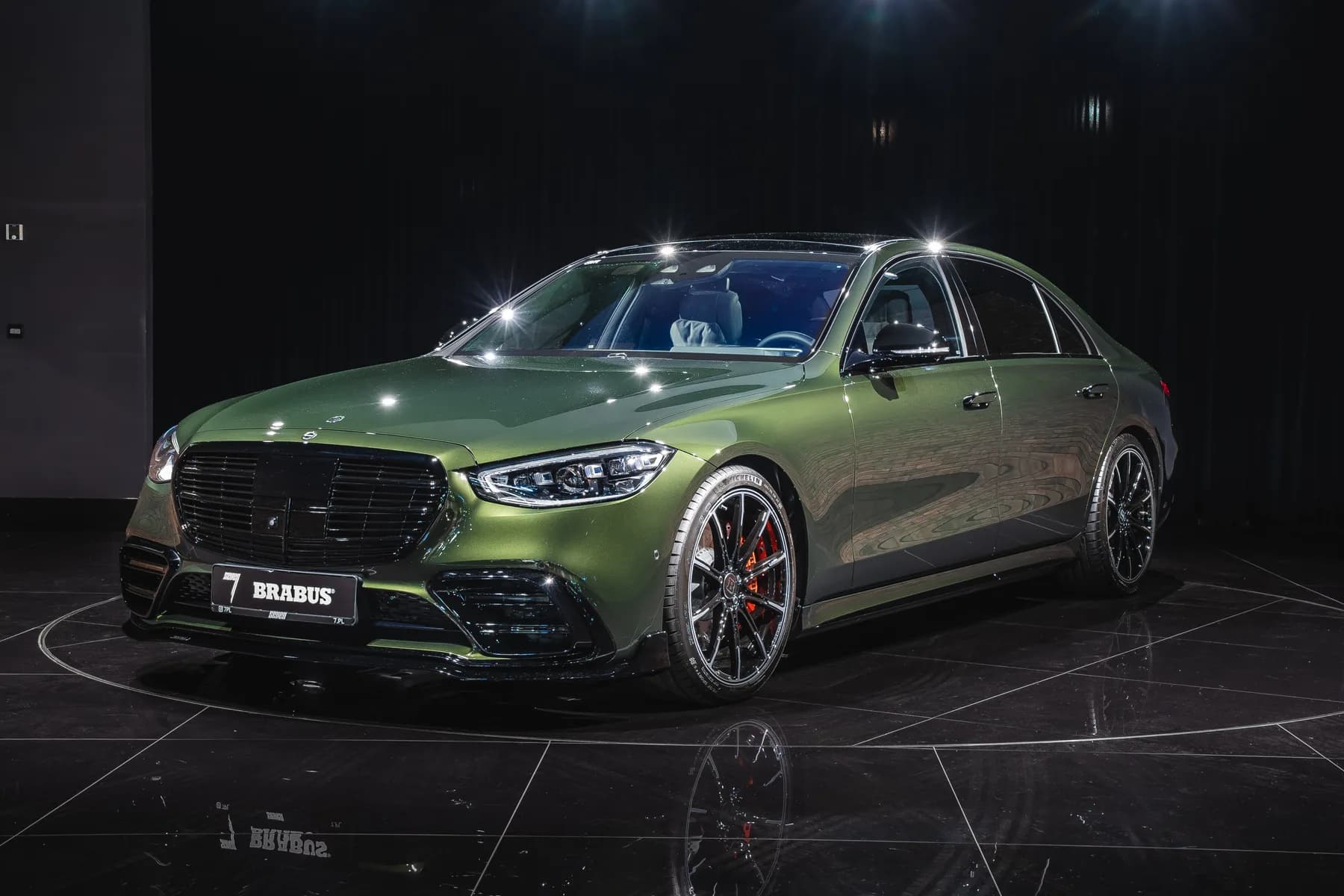
Websites for luxury and supercar hire companies in the UK
We design and build the whole online side of a hire business: the fleet pages, the booking flow, a panel your team runs and the launch campaign. FancyRent, a luxury rental company with 37 cars, took nearly 400 bookings in its first 2.5 months.
A hire customer decides on a phone, in a few minutes, usually with two or three companies open. These are the parts we build so the decision ends on your enquiry form.
A fleet that looks like one brand
Every car gets a clean cut-out and its own page with specs, the day, weekend and weekly price and availability.
An enquiry in one flow
The visitor picks the car, the dates, delivery or collection and the extras without leaving the page. The deposit and what it covers are shown before the enquiry is sent.
A panel your team runs
Add a car, change a weekend price, set a discount code or block dates yourself. No developer for day-to-day changes.
An assistant for enquiries
For FancyRent we built an AI agent that answers enquiries, matches them to a car and works with the booking calendar.
Fast on an ordinary phone
Large car photos are the heaviest part of a hire site. We test on real low-end devices before launch.
Found in search
Each car and each occasion, such as wedding hire, has its own URL, metadata and sitemap entry, so a search for a specific model can land on the right page.
What you get at launch
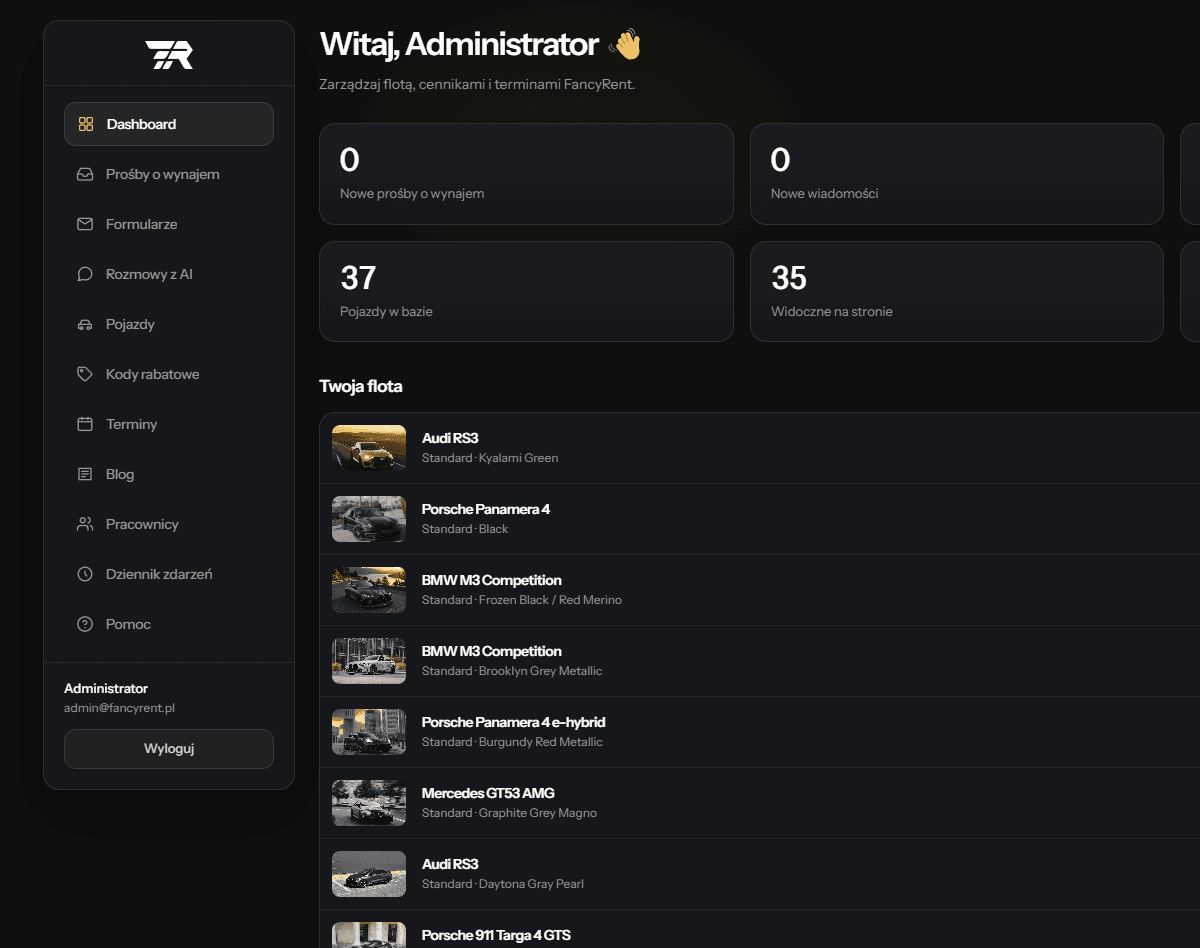
The public site and the panel behind it. The panel below is the one the FancyRent team uses every day.
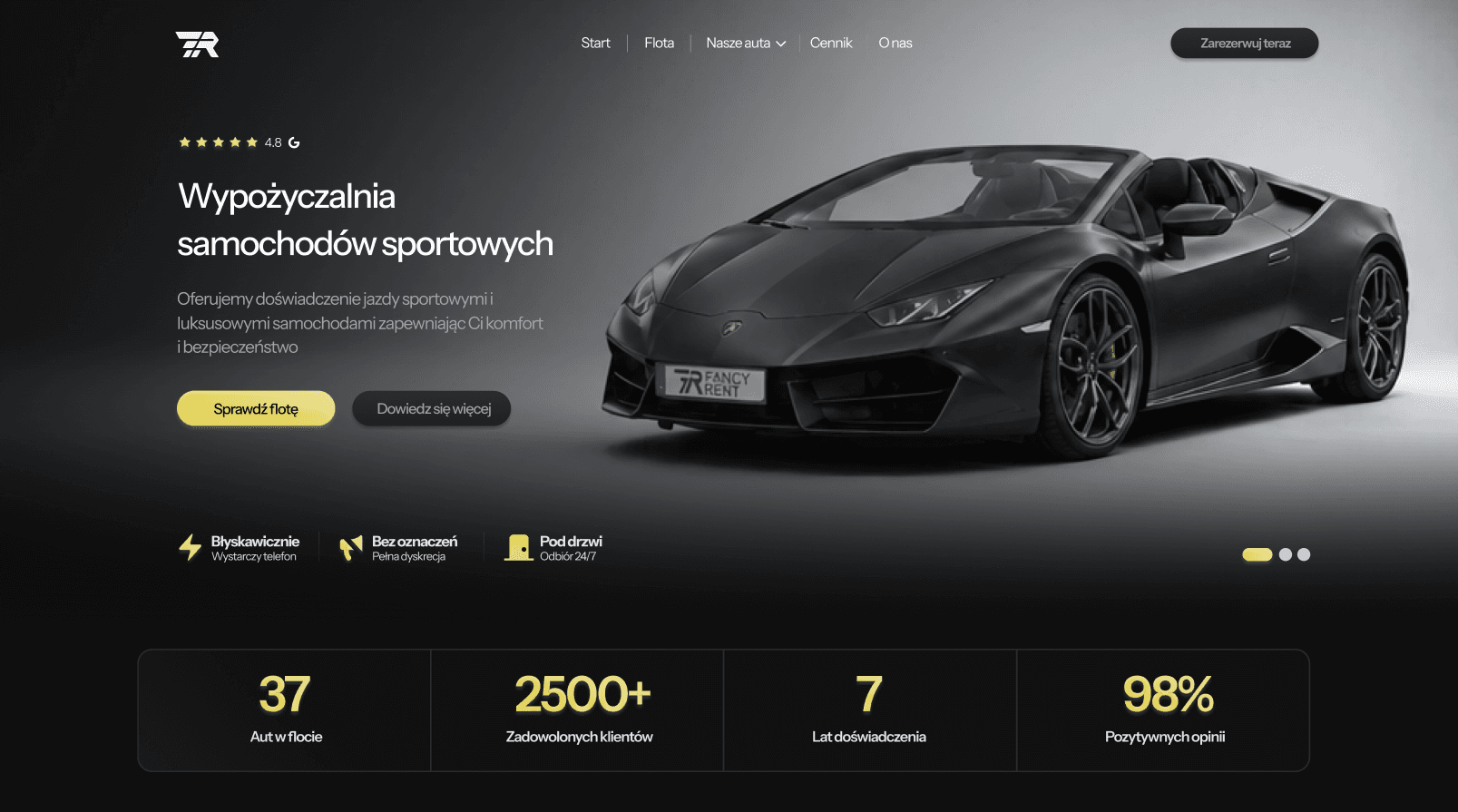
The site
Home page built around the fleet
Fleet list with filters by category
A page for every car: specs, price, availability
Pricing and rental terms
Booking request flow
Blog for search traffic
The panel
Rental requests and contact forms in one inbox
Vehicles: add, edit, show or hide on the site
Dates and availability
Discount codes
Staff accounts and an event log
Conversations handled by the AI assistant
Two automotive builds, start to finish
Both are live. Open either case study to see the screens, the CMS and the numbers.
Luxury car rental
FancyRent
Brand, website with a fleet configurator, a CMS for the fleet and bookings, an AI assistant and the launch campaign.
~400
bookings in 2.5 months
510k+
campaign views
Site and configurator matched to the brand
Panel for content, fleet, staff and discount codes
All three can be the right answer. It depends on the size of the fleet and on how much of your price is the brand.
Website template
Framer, Webflow
Time to launch
A few days
Booking
A contact form or an embedded third-party widget
Managing the fleet
You edit car pages yourself in the template CMS
Look
Shared with every company that bought the same template
Fits best
A new company with a handful of cars that needs to be online this week
Rental software storefront
Booqable and similar tools
Time to launch
A few days
Booking
Built in, tied to availability in the same tool
Managing the fleet
Managed in the software you already run the business in
Look
Limited to the themes the tool offers
Fits best
Companies where operations matter more than how the site looks
Custom site
What we build
Time to launch
Two to four weeks
Booking
A flow designed around your cars, extras and rules
Managing the fleet
A panel shaped to how your team works
Look
Your own brand, on the site and in the ads
Fits best
Premium fleets where the brand is part of the price and paid traffic has to convert
Live in two to four weeks
Most of our projects launch in that window. We work remotely and in English; Poland is one hour ahead of the UK, so the working day is almost the same.
Week 1
Direction and fleet plan
Audience, key actions and what counts as success. Photography and the car catalogue are planned here, because they decide how the site looks.
Weeks 2 to 3
Design and build together
As soon as a section is approved it gets built, so you give feedback on a real page in the browser.
Week 4
Polish and launch
Performance pass on real phones, metadata and sitemap, CMS handover so your team can edit on day one.
After launch
Campaign and iterations
Many clients stay month to month: ads built from the same assets as the site, weekly improvements.
What it costs
Two ways to work with us. You get a written quote in pounds before we start. The prices are our US dollar prices ($2,000 and $6,000) converted on 25 November 2026 and rounded.
Launch
Starting at
£1,500/project
A defined scope with fixed milestones and a 2 to 4 week production cycle. The usual choice for a new hire site.
Momentum
Starting at
£4,600/month
A dedicated senior team, month to month, with weekly iterations. For companies that keep adding cars, locations and campaigns.
What moves the price
The starting price covers a focused scope. These five things decide where your quote lands.
Size of the fleet
Every car needs photos, specs and a page. Ten cars and sixty cars are different projects.
Photography
Usable photos keep the cost down. If the cars need shooting or cutting out, that work is added.
How booking works
A request form is the simplest version. Live availability, deposits and online payment add scope.
Integrations
Connecting existing fleet or booking software depends on its API, so we check it before quoting.
Campaign
Launch ads and creative are quoted separately from the site.
Questions hire company owners ask us
How long does a car hire website take?
Most of our projects launch in two to four weeks. The timeline depends mostly on the fleet: how many cars there are and whether usable photos already exist.
Is this car hire software or a website?
The customer-facing half: the public site and the panel for the fleet, prices, dates, enquiries, discount codes and staff. It is not a full back office. Hire agreements, fines and accounting stay in your hire software, and whether the two can be connected depends on its API.
Can we add cars and change prices ourselves?
Yes. The panel is part of every build. FancyRent manages its fleet, prices, discount codes, dates and staff accounts in its own panel.
Can customers pay the deposit online?
It can be built. FancyRent confirms each request by hand, so online payment is not part of that project and we do not present it as ready. It is scoped and priced separately, with the payment provider you use.
Do you work with UK companies?
Yes. We are based in Poland, work remotely and in English, and quote in pounds. Our case studies are live and you can open them above.
Do you also run the advertising?
Yes. For FancyRent we planned and produced the launch campaign from the same assets as the site. It reached over 510,000 views and the company took nearly 400 bookings in 2.5 months.
Building something similar?
Tell us about your project and we will get back to you with specifics.